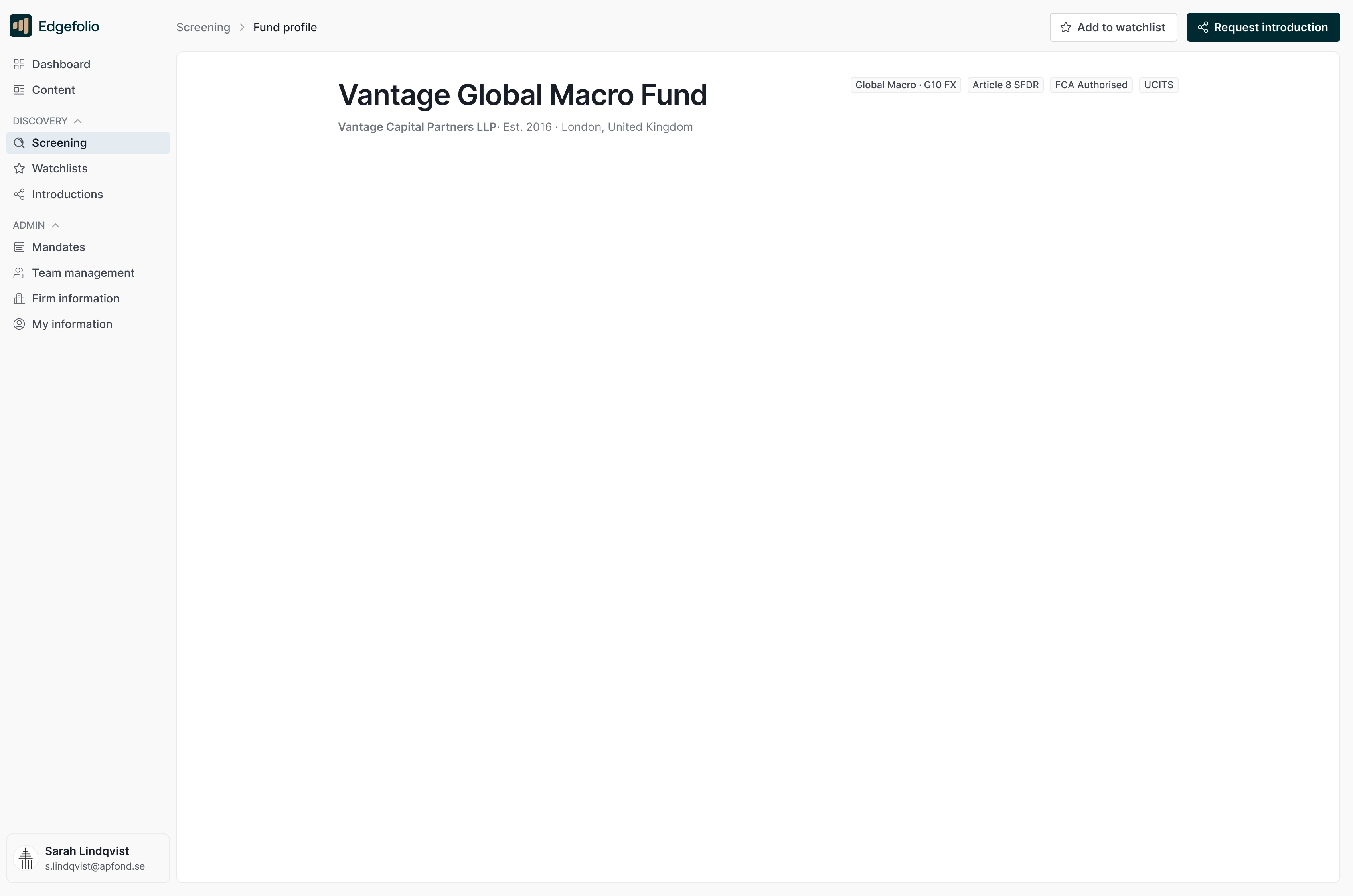








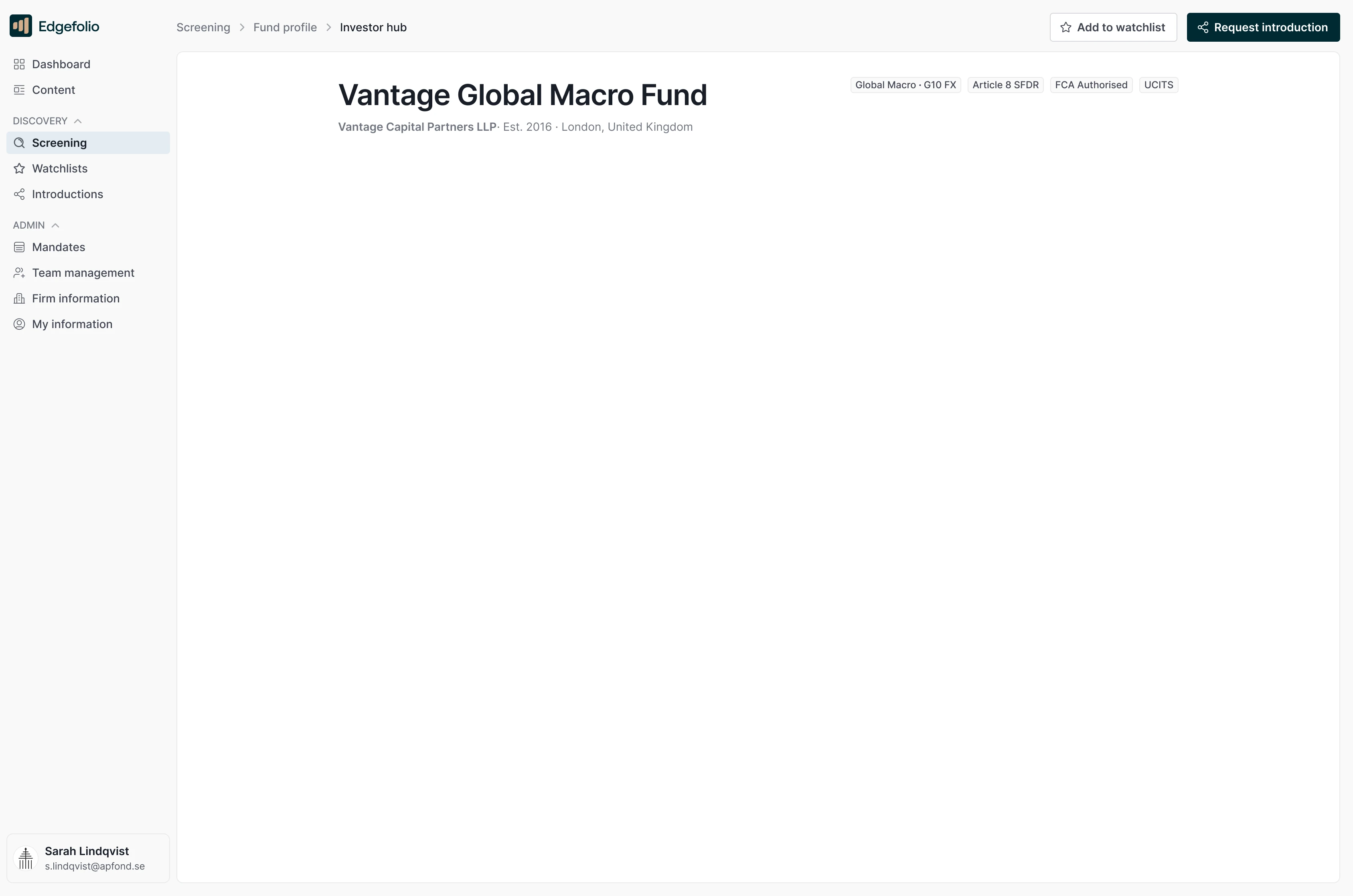






















Discovery revealed two users with opposing jobs to be done
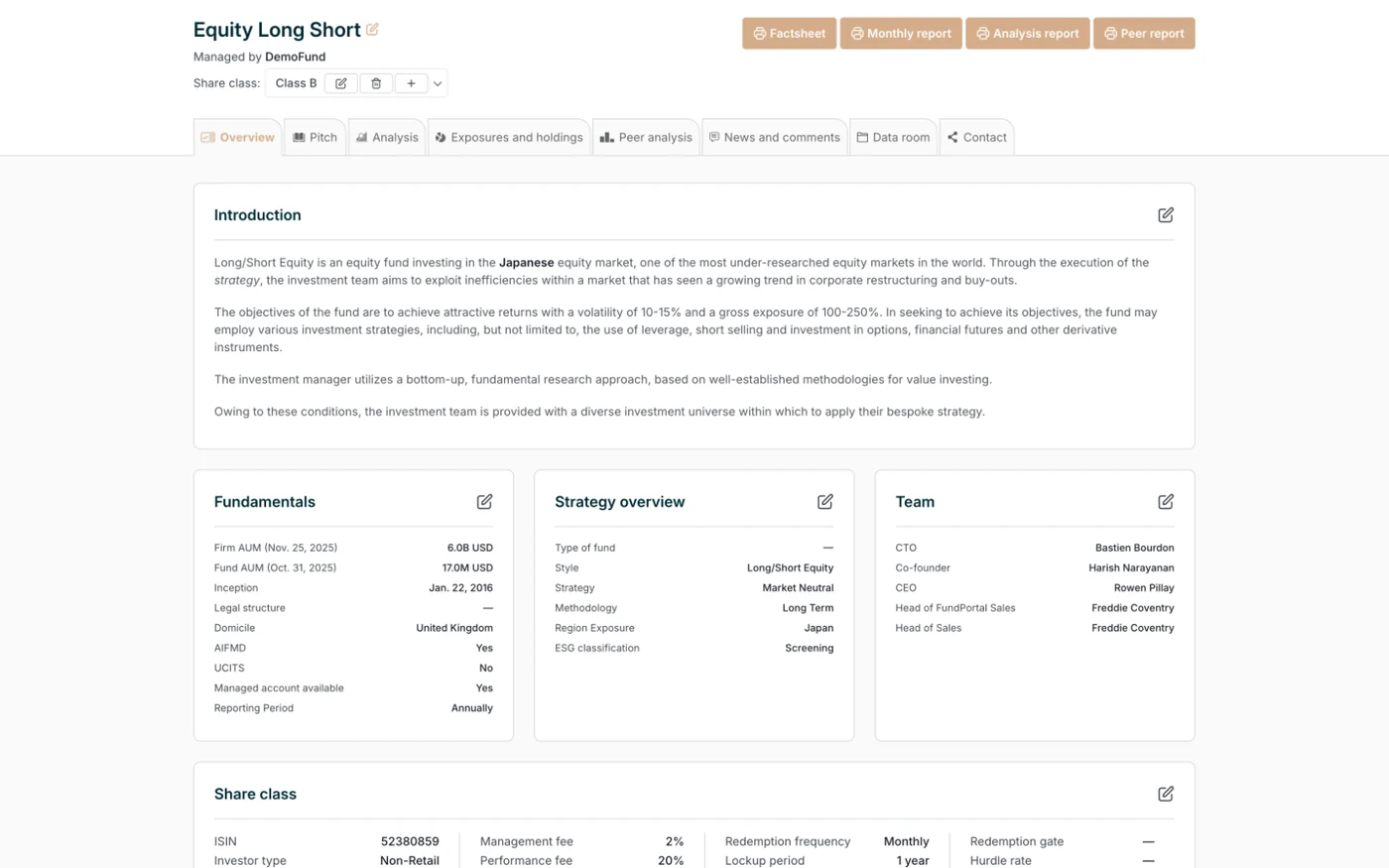
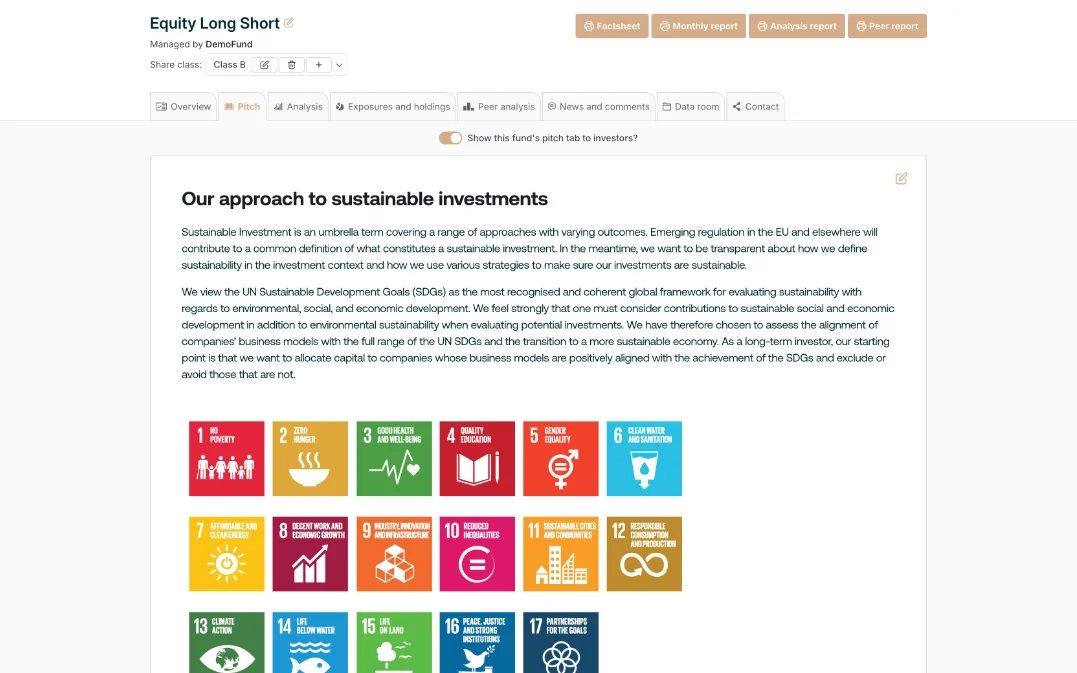
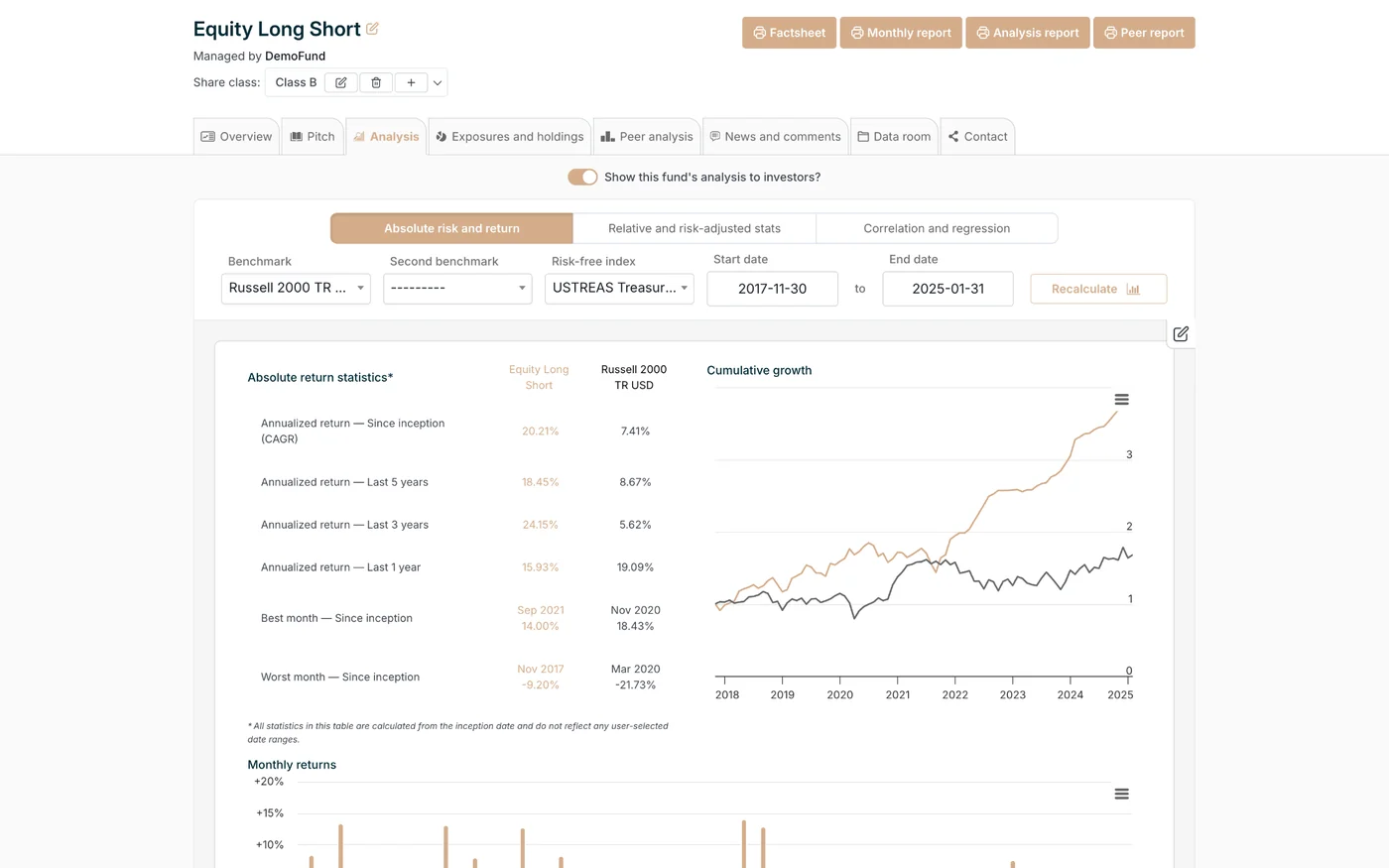
The brief was four words, redesign the fund profile. No problem statement, no user definition, no product manager in the loop. I ran the research myself: the information architecture mapped, session recordings of each reader, allocator interviews. The same pain kept returning, too many clicks between a question and its answer.



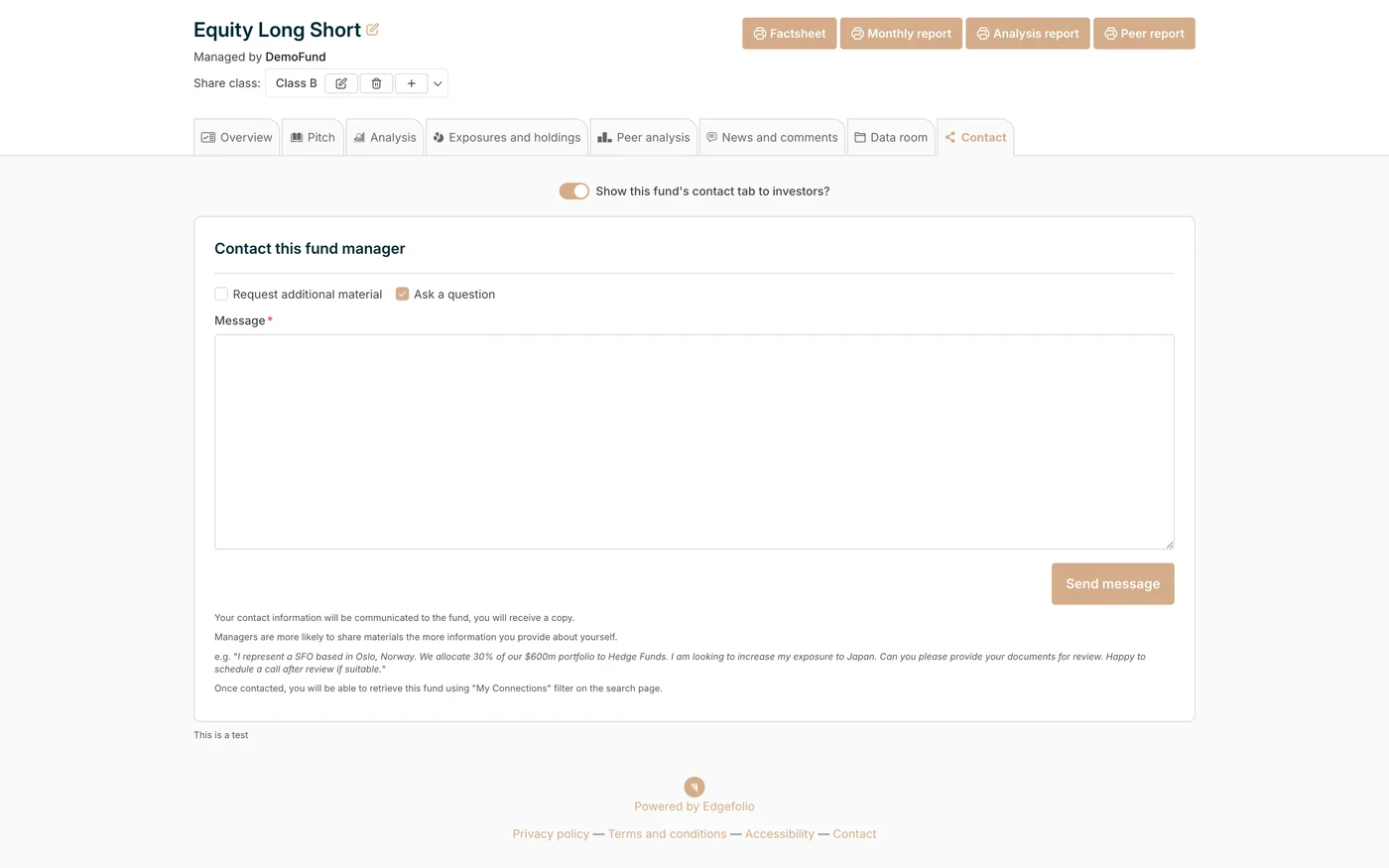
Allocators are senior and hard to book, so I rebuilt the personas as AI research agents and put my questions to them between sessions. The agents sharpened the questions. Real allocators settled the answers.
Midway, the moderated sessions stopped giving me new answers. Nobody was asking for more. I went looking anyway. The sales team and the customer success manager hear allocators every day, so I went to them for the unprompted kind: the complaint log, the daily pain points, raw data no test session could give me. That is where the real issue showed itself. Two people were reading one profile with opposite jobs. The analyst screens funds out. The portfolio manager builds the case for the investment committee. One profile was doing both jobs, and neither well.
Usability testing with allocators validated a split information architecture
I reframed the work around jobs to be done and UX psychology. Each reader's job set the order of the page, and Tesler's law, cognitive load and information scent set its shape. Then I built two structures to test it. One full page holding everything, in order. One profile split in two, the Conviction Funnel to catch interest and the Investor Hub to hold the proof. Allocators backed the split. Each page now starts where its job starts.
The Conviction Funnel follows the analyst's five screening questions
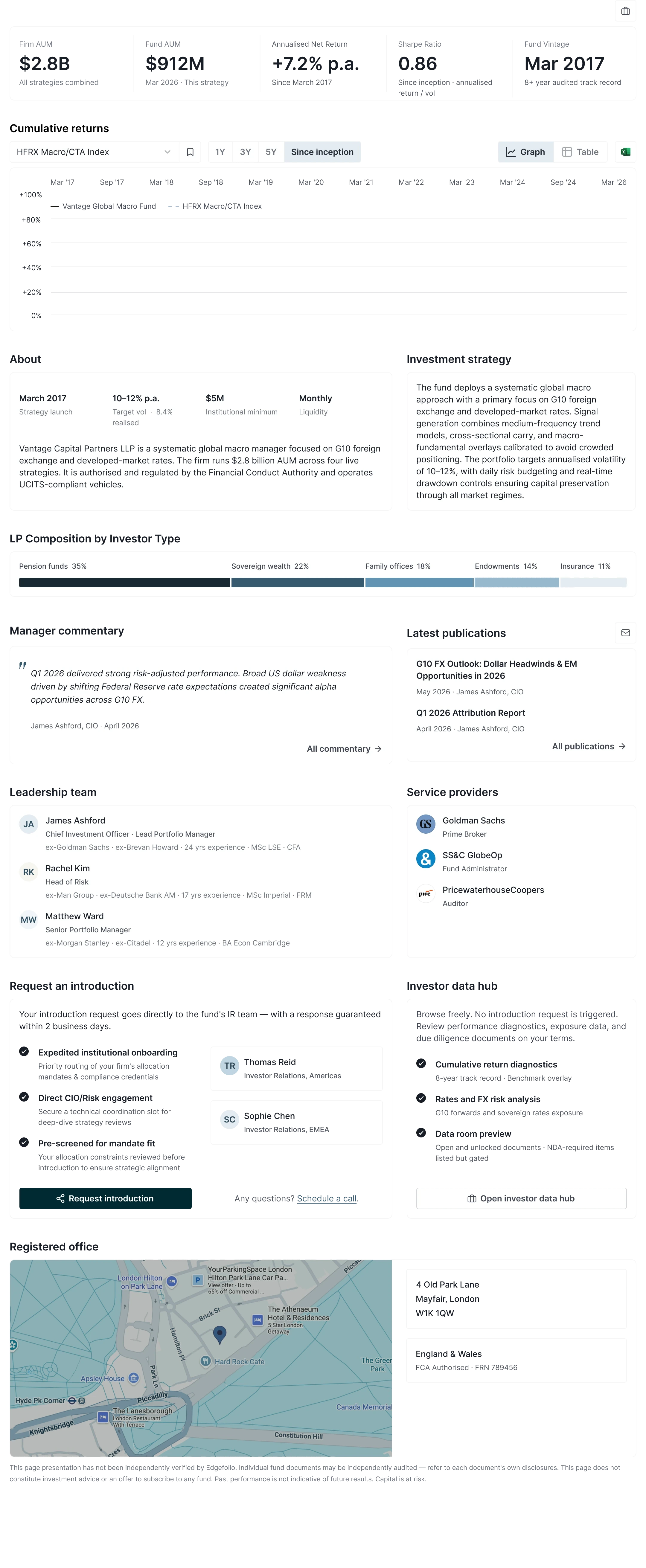
The analyst came first. In the recordings they opened a tab, found nothing that answered their question, and left. I mapped the order a screener asks their questions and made that order the page. Five questions, each section earning the next, capped at five because that was as far as testers followed.
Tesler's law moved the complexity into the structure. Cognitive load set the cap at five. Information scent means every heading promises its answer.
-
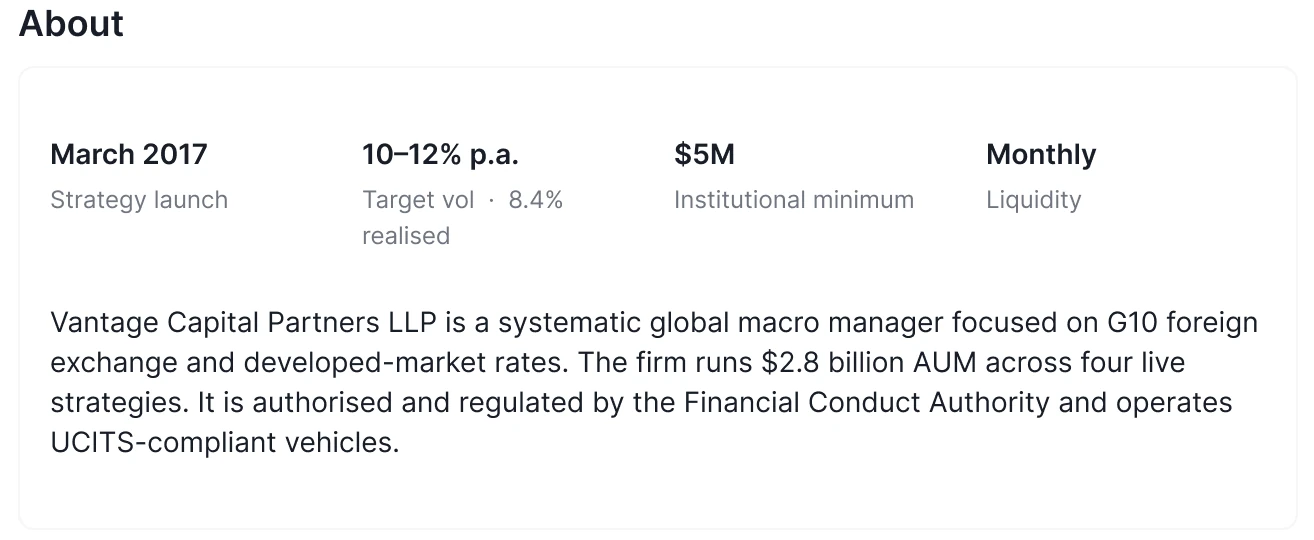
01Hook
What does this manager believe, and why should I keep reading?
The strategy and the manager's reasoning, before any number.
In the profile
-
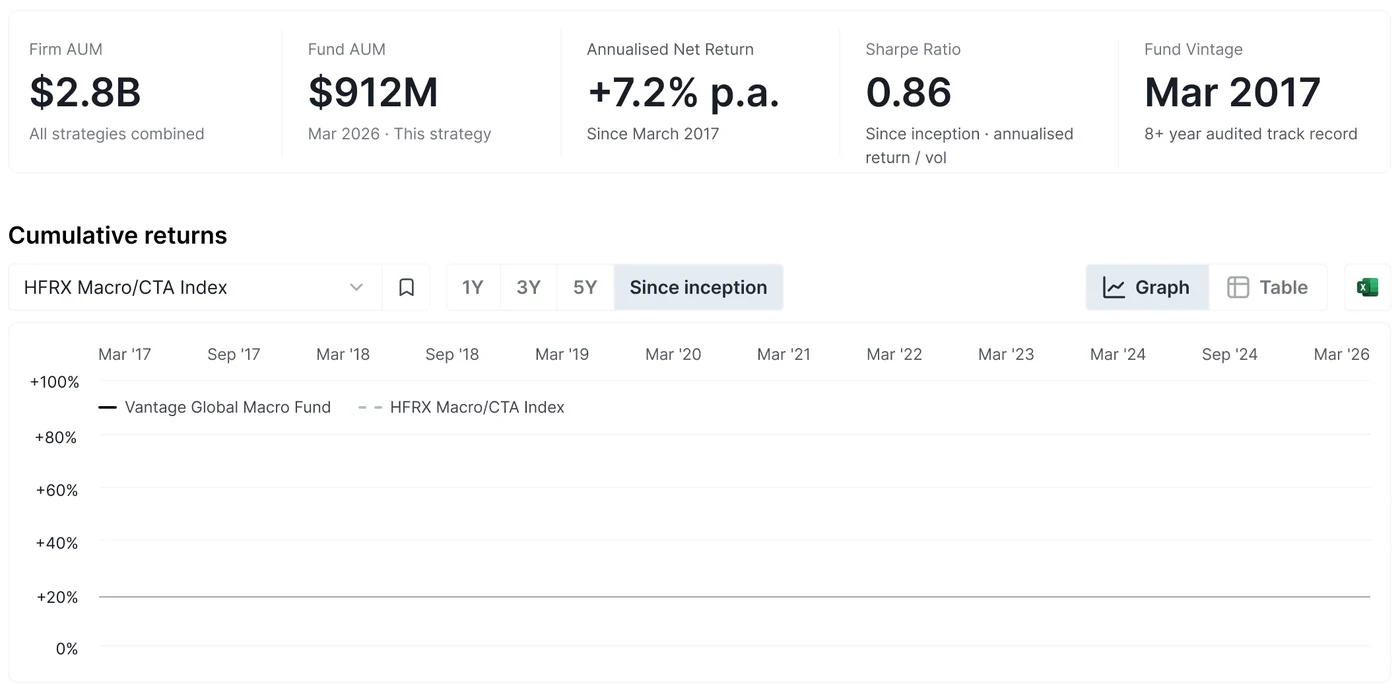
02Proof
Does the record back the story?
Returns, key metrics, the audited track record.
In the profile
-
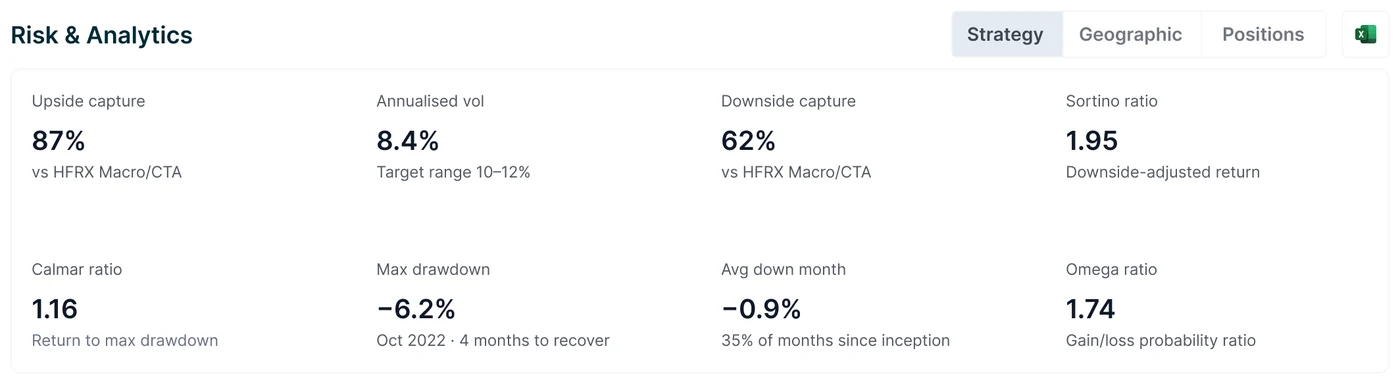
03Risk
What could go wrong, and do they manage it?
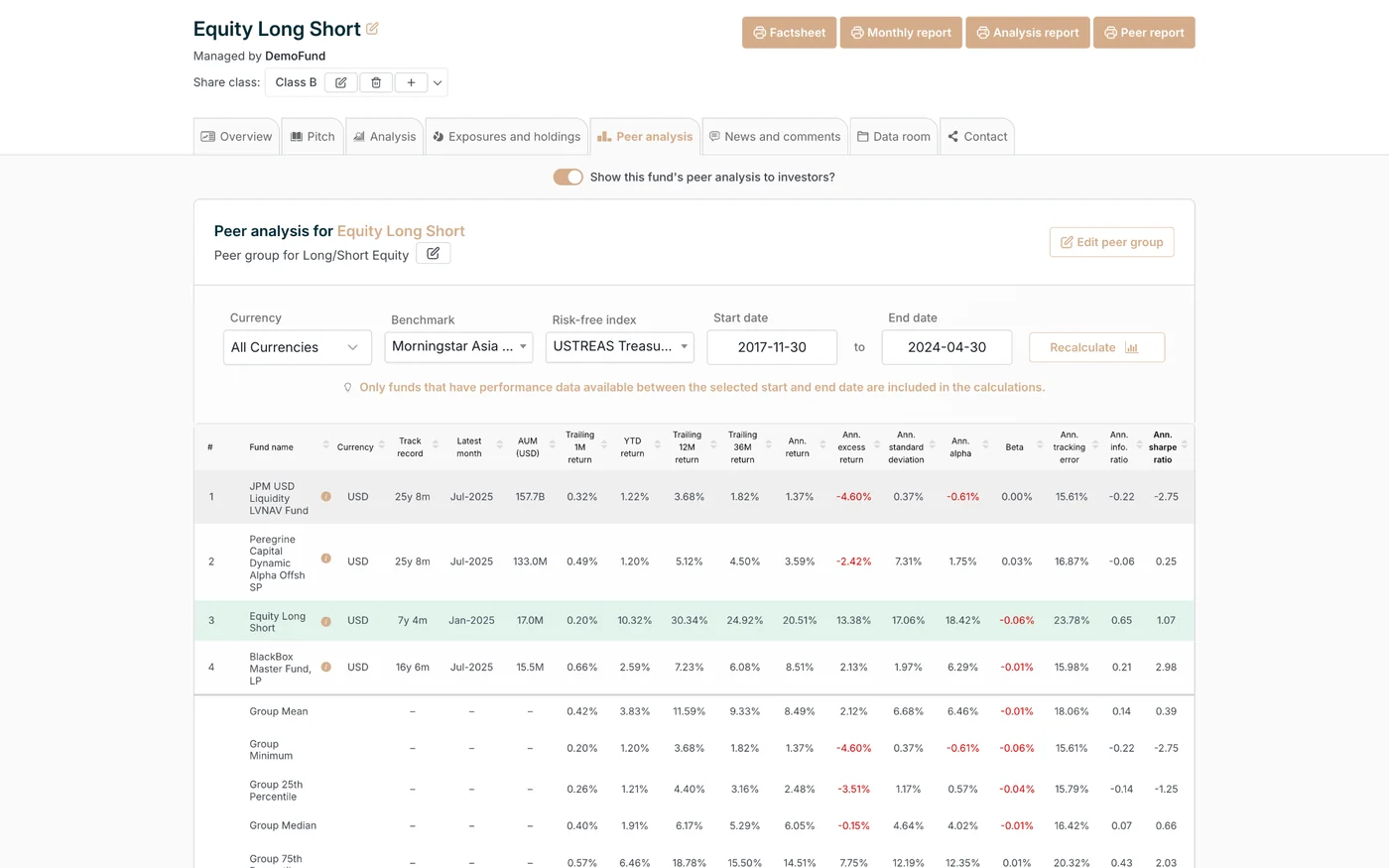
Drawdown, volatility, exposures, how the fund behaves under stress.
In the Investor Hub
-
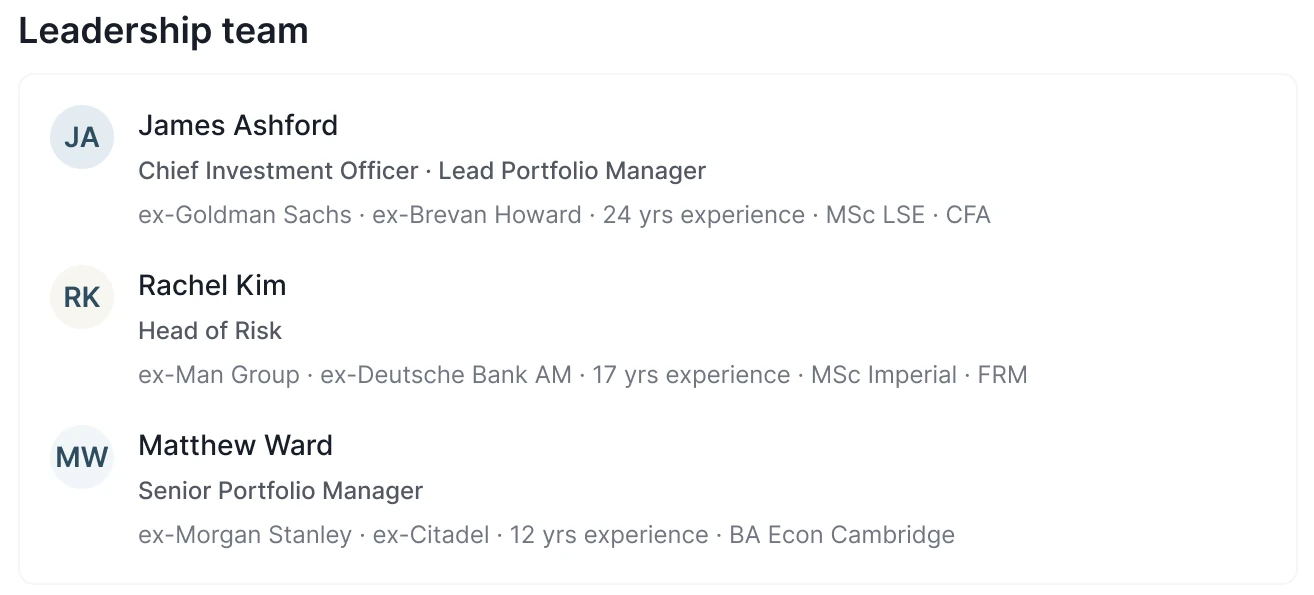
04Trust
Who are these people, and does the operation hold?
Team, structure, service providers, the compliance posture.
In the profile
-
05Access
How do I invest, and on what terms?
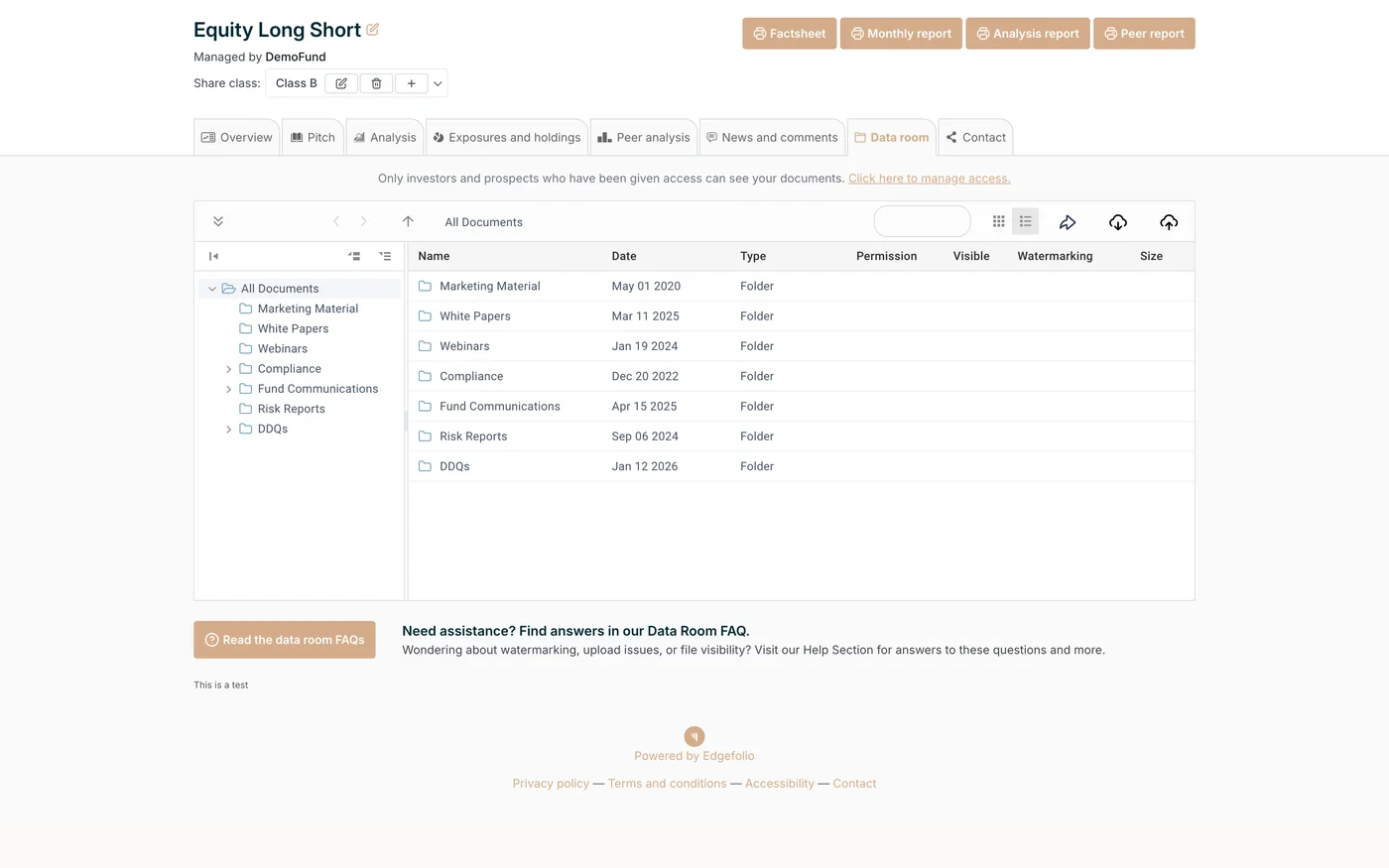
Liquidity, minimums, the data room and the path to allocation.
In the profile
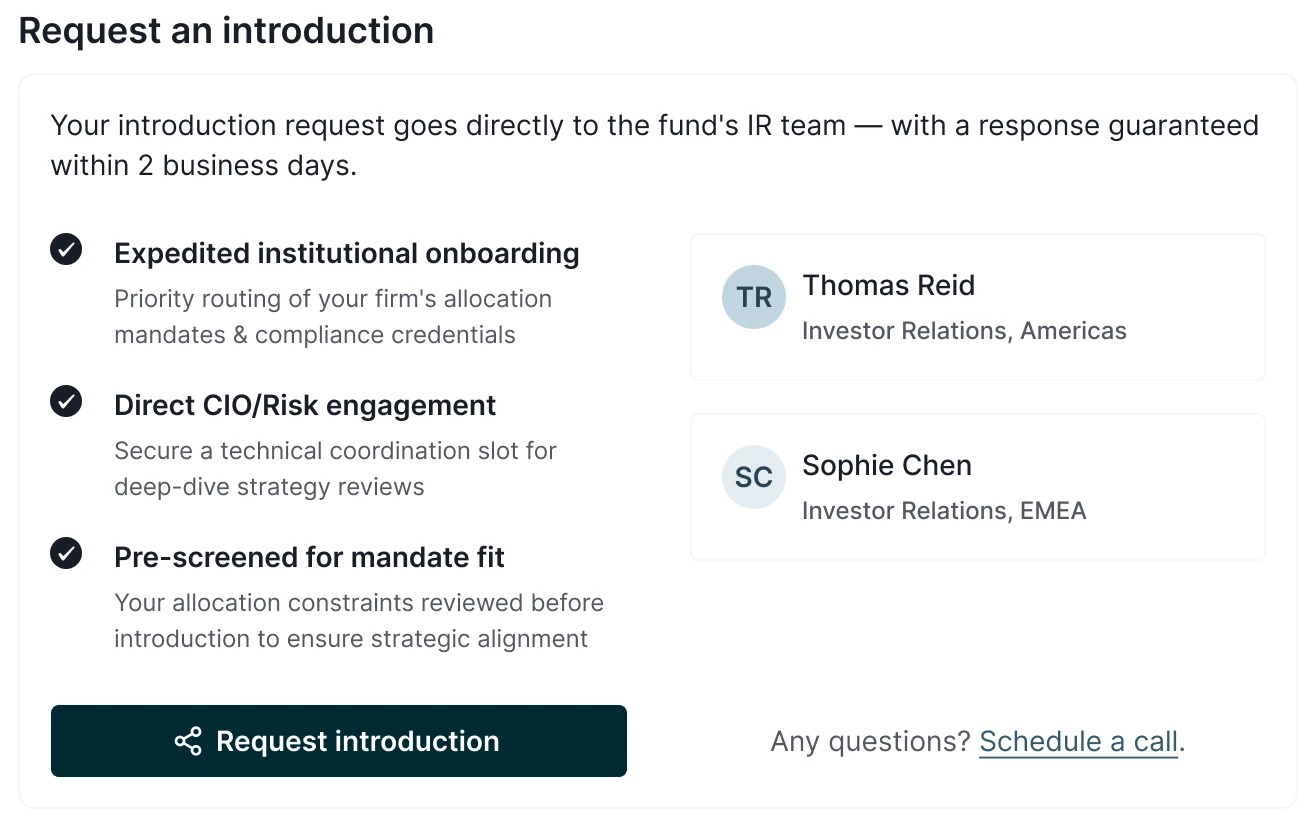














I built the prototypes with AI tools and tested them. Allocators went looking for the data on their own. The order did the persuading.
"I don't trust a number I can't see the reasoning for."
- Overview
- Pitch
- Analysis
- Exposures
- Peer analysis
- News
- Data room
- Contact
The screener · invites you in
- Hook, proof, risk, trust, access
from Overview · Pitch · Analysis · Contact, re-sequenced
The proof · when you're ready
- Analytics, peers, data room, gated docs
from Exposures · Peer · News · Data room
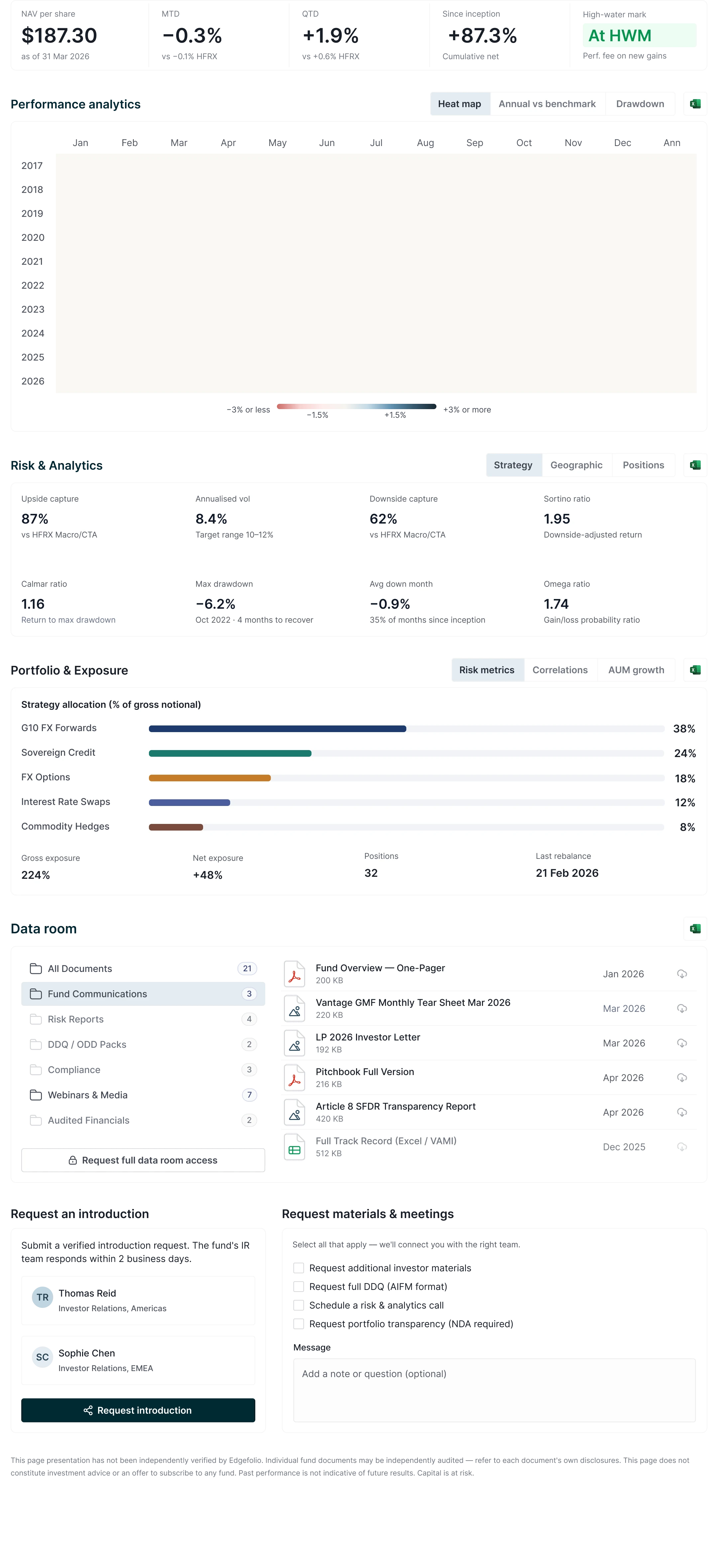
The Investor Hub carries the due-diligence evidence to investment committee
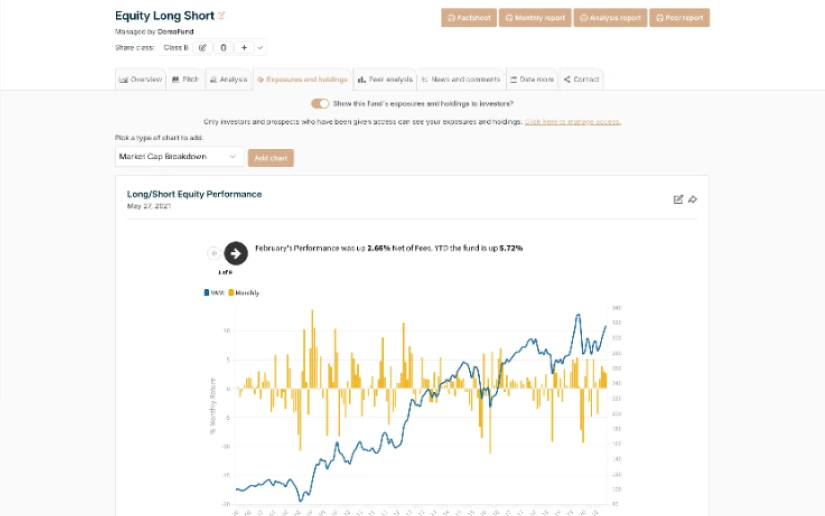
Once the analyst is convinced, the portfolio manager takes over and the job turns to proof. The Investor Hub holds it: a data room requested and granted so compliance can sign off, and a memo tool that drafts the committee memo.


Fund managers see the funnel in reverse, with automated onboarding
The fund manager watches the same profile from the supply side. Their dashboard is the Conviction Funnel in reverse: who is looking, what they read first, what still needs work.

Getting a fund listed was manual and piecemeal. I rebuilt it as an automated journey for the capital-introduction teams, from the first invite to self-serve learning.
How a profile earns an investor's trust is an essay of its own: Who uses a fund profile?
7 of 7 allocators reached the data tier unaided, and 420+ managers onboarded
In testing, 7 of 7 allocators reached the data tier on their own. The onboarding brought 420+ managers in at Bank of America in three months. Institutional allocation runs on months to years, so the 20% conversion lift is an honest projection. The prototypes came out of the AI framework I proposed in January.
I reframed a layout brief as a structural product decision
I was handed a layout job and found a structural problem nobody had named. The brief said redesign the profile. The evidence said two jobs, each needing its own surface, and it took going past the research plan to see it. The sharpest input came from the people in allocator conversations every day. On a project shaped like this one, that is where I now start.